

Are Performance Tires Safe for All Weather Conditions?
The safety considerations of using performance tires depend on the weather. These tires grip the road well in dry conditions but can struggle in rain, snow, or ice. Some people assume performance tires work in any condition because they enhance speed and handling. That’s not always true.
Let’s break down the legal and safety aspects of using performance tires in different weather conditions.
What Are Performance Tires?
Performance tires are designed for speed, grip, and handling. They have softer rubber and unique tread patterns. Many sports cars and high-performance vehicles come with these tires because they improve acceleration, braking, and cornering.
But performance tires aren’t perfect. Their softer rubber wears out faster, and they don’t always perform well in cold or wet weather.
Legality of Performance Tires: Are They Street Legal?
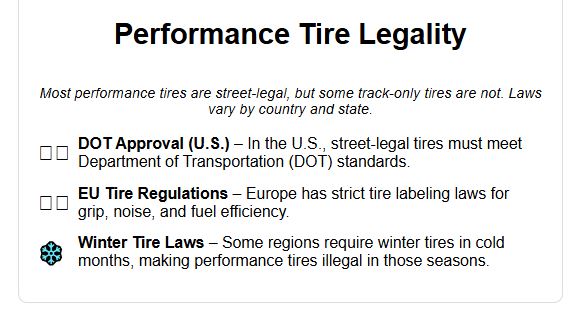
Most performance tires are street-legal, but some track-only tires are not. Laws vary by country and state.
- DOT Approval (U.S.) – In the U.S., street-legal tires must meet Department of Transportation (DOT) standards.
- EU Tire Regulations – Europe has strict tire labeling laws for grip, noise, and fuel efficiency.
- Winter Tire Laws – Some regions require winter tires in cold months, making performance tires illegal in those seasons.
Always check local tire laws before driving on performance tires in extreme weather.
How Performance Tires Handle Different Weather Conditions
Dry Roads: The Best Case for Performance Tires
Performance tires shine on dry roads. They stick to the pavement, allowing sharper turns and quicker stops. But the downside? Faster wear and a rougher ride.
Wet Roads: Risk of Hydroplaning
Rain changes everything. Performance tires have shallow tread depth, which can lead to hydroplaning (losing contact with the road due to water). Some performance tires handle light rain well, but deep puddles or heavy downpours are a challenge.
Cold Weather: Rubber Gets Harder
When temperatures drop below 45°F (7°C), performance tires lose grip. The rubber becomes stiff, making braking and cornering dangerous.
Snow and Ice: A Bad Idea
Using performance tires in the snow is like wearing race shoes on ice—it doesn’t work. The tread pattern doesn’t provide enough traction, and the rubber hardens in freezing temperatures.
Are Performance Tires Safe for Everyday Driving?
That depends on where and how you drive. If you live in a warm, dry climate, performance tires are a great option. If you experience rain, snow, or extreme cold, all-season or winter tires are safer choices.
Best Practices for Safe Driving on Performance Tires
✔️ Check Tread Depth Regularly – Worn treads reduce grip.
✔️ Monitor Tire Pressure – Cold weather can cause pressure drops.
✔️ Avoid Standing Water – Performance tires struggle in deep puddles.
✔️ Drive Cautiously in Cold Weather – Hard rubber equals less traction.
✔️ Consider a Second Set of Tires – Swap to winter tires in cold months.
How to Choose the Right Performance Tires for Your Climate
1. Summer Performance Tires
- Best for dry, warm conditions.
- Good grip but poor wet and cold performance.
2. All-Season Performance Tires
- A mix of grip and durability.
- Better in light rain but still not ideal for snow.
3. Winter Performance Tires
- Softer rubber for grip in the cold.
- Not as good as dedicated winter tires but better than summer tires.
Choosing the right performance tire depends on your climate and driving needs.
Do Performance Tires Wear Out Faster?
Yes. The softer rubber wears down quicker than standard tires. Some performance tires last 15,000-20,000 miles, while regular tires can last 40,000-60,000 miles.
To extend tire life:
- Rotate tires every 5,000-7,000 miles.
- Avoid aggressive driving (fast acceleration, hard braking).
- Keep proper tire pressure for even wear.
The Cost Factor: Are Performance Tires Worth It?
Performance tires are more expensive than regular tires, often costing $150-$500 per tire. But are they worth it?
✔️ Yes, if you drive a sports car or value handling.
❌ No, if you drive in mixed weather or need long-lasting tires.
Consider your climate, driving style, and budget before choosing performance tires.
Frequently Asked Questions
1. Can I use performance tires in the winter?
No, summer performance tires become hard and lose traction in cold temperatures. Use winter tires or all-season performance tires instead.
2. Do performance tires improve gas mileage?
No. Performance tires create more friction, which can lower fuel efficiency.
3. Are performance tires safe in the rain?
It depends on the tire. Some have rain-friendly tread, but many are prone to hydroplaning.
4. How do I know if my performance tires are worn out?
Check tread depth. If it’s below 2/32 of an inch, replace them. Also, look for uneven wear or cracks in the rubber.
5. Can I mix performance tires with regular tires?
No, this can cause handling issues. Always use a matching set of four.
6. Are performance tires good for daily driving?
Only in dry, warm conditions. If you face rain or cold, all-season or touring tires are better.
Final Thoughts: Should You Get Performance Tires?
Performance tires can make your car faster, more responsive, and fun to drive. But they come with trade-offs. If you live in a warm climate and enjoy spirited driving, they’re a solid choice. But if you deal with rain, snow, or cold weather, consider a different option.
Want the best of both worlds? Switch between performance and winter tires based on the season. That way, you’ll stay safe without sacrificing performance.