

The safety benefits of run-flat tires for high-speed driving are significant, potentially being the difference between a controlled stop and a dangerous accident. Imagine you’re cruising down the motorway, enjoying a spirited drive, and suddenly – *bang* – a tire blowout. With standard tires, this can mean a sudden, violent loss of control. But with run-flats, the story can be very different.
Enhanced Control After Puncture at High Speeds
What Happens When a Standard Tire Blows at High Speed?
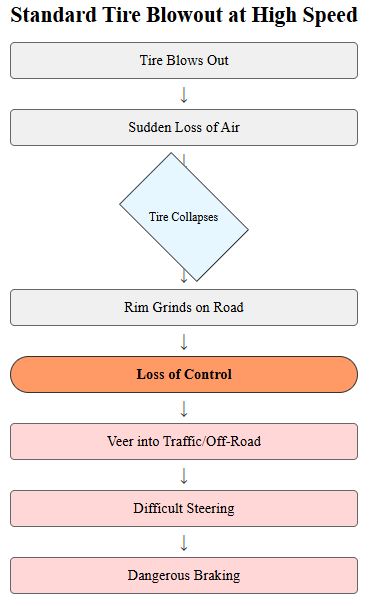
Think of a balloon popping. That’s essentially what happens to a regular tire. All the air escapes instantly, the tire collapses, and the rim is now grinding directly on the road surface.
At high speed, this causes a dramatic shift in the vehicle’s balance, pulling it sharply towards the side of the flat. Steering becomes incredibly difficult, and braking can worsen the situation, potentially leading to a spin or a collision.
Run-Flat Tires: Maintaining Stability and Control
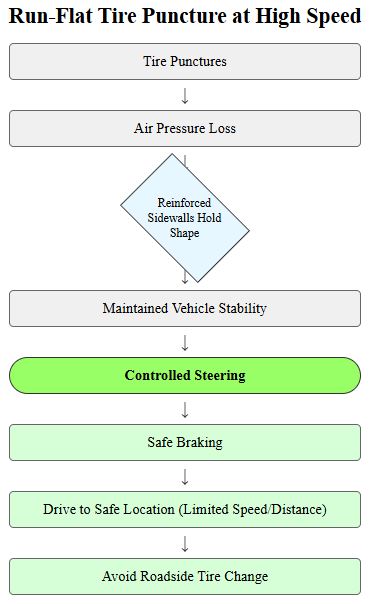
Run-flat tires are built with reinforced sidewalls. These strong sidewalls keep the tire’s shape even after air pressure is lost. You won’t experience the same sudden drop and violent pull. Instead, you’ll feel a vibration and likely see a warning light on your dashboard. This vital support allows you to maintain a much greater degree of control over the vehicle.
You can steer more safely and brake more effectively, allowing you to get your car off the road and to a safe location.
Reduced Risk of Losing Control
Staying in Your Lane: A Critical Safety Advantage
The most significant danger after a high-speed blowout is losing control and veering into other traffic or off the road entirely. Because run-flat tires allow you to keep control of the steering, they considerably lower this risk. You’re much more likely to be able to stay within your lane and bring the vehicle to a controlled stop. This is crucial for avoiding collisions with other vehicles or roadside hazards.
The “Get You Home” Capability: More Than Just Convenience
Run-flat tires aren’t designed for extended driving after a puncture, but they *are* designed to get you to a safe place. Typically, you can drive at a reduced speed (usually around 50 mph) for a limited distance (often up to 50 miles). This “get you home” or “get you to a service station” capability is a major safety benefit. It eliminates the need to change a tire on a busy highway, a notoriously dangerous situation, especially at night or in bad weather.

Run Flat Tires and High Performance Vehicles
Sports Cars and Run-Flat Tires
Many high-performance vehicles, particularly sports cars, are equipped with run-flat tires as standard equipment. The reason is simple: these cars are often driven at higher speeds, increasing the risk associated with a standard tire failure. The added safety that run-flats provide is considered essential for these types of vehicles.
Frequently Asked Questions (FAQs) about Run-Flat Tires
Are run-flat tires more expensive than regular tires?
Yes, run-flat tires generally cost more than standard tires. They also may require specific wheels.
Can all cars use run-flat tires?
No. Your car needs to have a Tire Pressure Monitoring System (TPMS) to alert you to a puncture. Also, the car’s suspension should be suitable for run-flats, though many modern cars are. Check your car’s owner’s manual or consult with a tire professional.
Do run-flat tires affect ride comfort?
Older run-flat tire designs were known for a harsher ride. However, technology has improved significantly, and modern run-flat tires offer much better ride comfort, approaching that of standard tires.
What should I do if my run-flat tire gets punctured?
Reduce your speed (usually to 50 mph or less) and drive carefully to a safe location or tire repair shop. Check your owner’s manual for specific recommendations for your tires.
Can a punctured run-flat tire be repaired?
Sometimes. It depends on the location and severity of the puncture. A tire professional must inspect the tire to determine if repair is possible. Many manufacturers advise replacement after a puncture.