

When it comes to your vehicle, tires are literally where the rubber meets the road. While performance enthusiasts might obsess over specialized racing tires, most of us simply need reliable tires that keep us safe and comfortable during our daily commutes, weekend road trips, or occasional adventures off the beaten path.
Choosing the right tires isn’t just about finding what fits your vehicle—it’s about matching your specific driving needs, local climate conditions, and personal priorities. The right set of tires can significantly improve your vehicle’s handling, fuel efficiency, comfort, and most importantly, safety.
Many drivers don’t realize that there’s a whole world of tire options beyond what came with their vehicle from the factory. Whether you prioritize a smooth, quiet ride, need extra traction in snowy conditions, or want something that will last for many miles before needing replacement, there’s a tire type designed specifically for your needs.
This guide will walk you through the major types of tires available for passenger vehicles, explaining their unique characteristics, advantages, disadvantages, and helping you determine which type is best suited for your particular situation. We’ll focus on practical information that helps everyday drivers make informed decisions, rather than specialized knowledge only useful to racing enthusiasts.
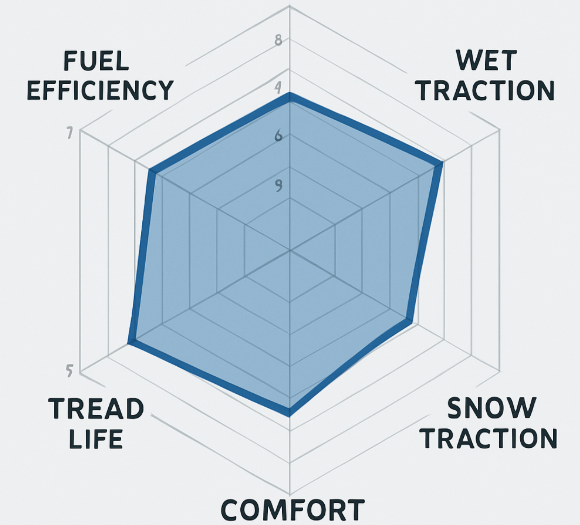
By the end of this article, you’ll understand the key differences between all-season, winter, summer, touring, and all-terrain tires—and you’ll be equipped with the knowledge to choose the perfect set of tires for your vehicle, driving habits, and local climate conditions.
All-Season Tires: The Versatile Option for Most Drivers
All-season tires are the most common type found on passenger vehicles today, and for good reason. These tires are designed to provide adequate performance across a wide range of conditions, making them a practical choice for drivers who experience varied but not extreme weather conditions throughout the year.
What Makes All-Season Tires Special?
All-season tires feature a moderate tread depth and rubber compounds that remain flexible in cool weather while still providing good handling in warm conditions. Their tread patterns typically include:
•Symmetrical designs with continuous ribs for smooth highway driving
•Circumferential grooves to channel water away and prevent hydroplaning
•Moderate siping (small slits in the tread blocks) to enhance traction on wet and light snowy surfaces
•Interlocking tread blocks that provide stability and even wear
Advantages of All-Season Tires
All-season tires offer several benefits that make them popular among everyday drivers:
Year-round usability: Perhaps the biggest advantage is convenience—you don’t need to change tires with the seasons in most moderate climates.
Cost-effective: Since you only need one set of tires instead of separate summer and winter sets, all-season tires are generally more economical.
Decent performance in most conditions: They handle reasonably well on dry roads, provide adequate wet traction, and can manage light snow.
Longer tread life: All-season tires typically last longer than performance-oriented summer tires, with many offerings in the 50,000-70,000 mile range.
Comfortable ride: Most all-season tires prioritize ride comfort and low noise levels, making them pleasant for daily driving.
Limitations of All-Season Tires
Despite their versatility, all-season tires do have some drawbacks:
Jack of all trades, master of none: By trying to perform in all conditions, all-season tires don’t excel in any specific condition. They offer compromised performance compared to specialized tires.
Limited winter performance: While they can handle light snow, all-season tires fall short in deep snow, ice, or temperatures consistently below freezing. The rubber compounds stiffen in very cold weather, reducing traction.
Less responsive handling: Compared to summer or performance tires, all-season tires typically offer less precise steering response and cornering grip.
Who Should Choose All-Season Tires?
All-season tires are ideal for:
•Drivers in moderate climates without extreme temperatures
•Those who prioritize convenience and don’t want to switch tires seasonally
•Daily commuters who drive primarily on paved roads
•Budget-conscious consumers looking for good value and longevity
•Drivers who occasionally encounter light snow but don’t regularly drive in severe winter conditions
Popular All-Season Tire Brands and Models
Some well-regarded all-season tire options include:
•Michelin CrossClimate2 ($170-$250 per tire)
•Continental TrueContact Tour ($120-$180 per tire)
•Bridgestone Turanza QuietTrack ($140-$220 per tire)
•Goodyear Assurance WeatherReady ($140-$200 per tire)
•Pirelli Cinturato P7 All Season Plus II ($130-$190 per tire)
The Bottom Line on All-Season Tires
All-season tires represent a practical compromise for most drivers, offering acceptable performance in a variety of conditions without the hassle of seasonal tire changes. While they won’t provide the ultimate grip of summer tires or the winter capability of dedicated snow tires, their versatility and convenience make them the default choice for most passenger vehicles.
If you live in an area with mild winters and moderate summers, all-season tires likely offer the best balance of performance, convenience, and value for your daily driving needs.
Winter/Snow Tires: Essential Safety for Cold Weather Driving
When temperatures drop and roads become covered with snow, ice, or slush, winter tires (also called snow tires) become essential safety equipment rather than just an optional upgrade. These specialized tires are engineered specifically to perform in cold weather conditions that would render other tire types dangerously ineffective.
What Makes Winter Tires Special?
Winter tires differ from other tire types in several crucial ways:
•Specialized rubber compounds that remain flexible in freezing temperatures, while all-season and summer tire compounds become stiff and less grippy
•Deep tread patterns with wider grooves to evacuate snow and slush
•Extensive siping (tiny slits in the tread blocks) that create thousands of biting edges for traction on ice
•Aggressive tread designs with substantial blocks that can dig into snow for improved grip
•Mountain Snowflake Symbol certification, indicating the tire meets specific performance requirements in snow testing
The Science Behind Winter Tires
Winter tires utilize special rubber compounds containing higher percentages of natural rubber and silica, allowing them to remain pliable even when temperatures fall well below freezing. This flexibility is crucial—a tire that becomes rigid in cold weather cannot conform to road surfaces and loses significant traction.
The extensive siping on winter tires creates thousands of tiny edges that grip snow and ice. As the tire rolls, these sipes open and close, biting into slippery surfaces and evacuating water from beneath the tire. This technology dramatically improves braking distances and cornering stability on winter roads.
Advantages of Winter Tires
The benefits of winter tires in appropriate conditions are substantial:
Superior cold-weather traction: Even on dry pavement, winter tires outperform all-season tires when temperatures drop below approximately 45°F (7°C).
Dramatically improved stopping distances: Tests consistently show winter tires reduce braking distances by 30-40% on snow and ice compared to all-season tires.
Better handling and control: The improved grip translates to more predictable handling and reduced risk of skidding or sliding.
Specific design for winter hazards: Features like the ability to pack snow in the tread (snow-on-snow provides excellent traction) and channels to evacuate slush help manage winter-specific driving challenges.
Limitations of Winter Tires
Winter tires do have some drawbacks to consider:
Seasonal use only: Winter tires wear extremely quickly in warm weather and provide less precise handling than summer or all-season tires on dry, warm roads.
Additional cost: Purchasing a second set of tires and possibly wheels represents a significant investment.
Storage requirements: You’ll need space to store your off-season tires.
Installation/removal twice yearly: The logistics of changing tires seasonally can be inconvenient, though many tire shops offer storage services.
Softer ride with more road noise: The softer compounds and aggressive tread patterns typically create more road noise and a slightly less firm ride.
Always Buy a Full Set of Four
One critical point about winter tires: always install a complete set of four matching tires. Installing winter tires on only the drive wheels (front wheels for FWD, rear wheels for RWD) creates dangerous handling imbalances that can lead to loss of control. The improved traction of winter tires on just two wheels can cause the vehicle to spin more easily when cornering or braking.
Who Should Choose Winter Tires?
Winter tires are strongly recommended for:
•Drivers in regions that regularly experience temperatures below 45°F (7°C)
•Anyone who must drive in snow, ice, or slush conditions
•Drivers in mountainous areas with winter precipitation
•Those prioritizing maximum safety in winter driving conditions
•Commuters who can’t avoid driving in winter storms
Popular Winter Tire Brands and Models
Some highly-rated winter tire options include:
•Bridgestone Blizzak WS90 ($130-$200 per tire)
•Michelin X-Ice Snow ($140-$220 per tire)
•Continental VikingContact 7 ($120-$190 per tire)
•Nokian Hakkapeliitta R5 ($150-$230 per tire)
•Pirelli Ice Zero FR ($130-$200 per tire)
Studded vs. Studless Winter Tires
Winter tires come in two main varieties:
Studded winter tires feature metal studs embedded in the tread that physically dig into ice for maximum traction. However, they damage road surfaces and are restricted or prohibited in many areas.
Studless winter tires rely on advanced rubber compounds and tread designs to grip snow and ice. Modern studless tires perform exceptionally well and are legal everywhere, making them the more practical choice for most drivers.
The Bottom Line on Winter Tires
If you live in an area with true winter conditions, dedicated winter tires represent one of the most significant safety upgrades you can make to your vehicle. The improved traction, shorter stopping distances, and better control can be life-saving in challenging winter driving situations.
While the initial investment and seasonal changeover represent minor inconveniences, the safety benefits far outweigh these drawbacks for anyone regularly driving in snow, ice, or consistently cold temperatures.
Summer Tires: Performance When the Weather is Warm
Summer tires, despite their performance-oriented reputation, aren’t just for sports cars and driving enthusiasts. These specialized tires offer significant benefits for everyday drivers in warm climates, providing enhanced safety and driving enjoyment when temperatures rise.
What Makes Summer Tires Special?
Summer tires are engineered with specific features that optimize warm-weather performance:
•Specialized rubber compounds that provide exceptional grip in warm conditions
•Less aggressive tread patterns with fewer grooves and sipes than all-season tires
•Solid, continuous ribs across the center of the tire for maximum road contact
•Rigid tread blocks that resist deformation during cornering
•Wide, straight grooves designed specifically for wet weather hydroplaning resistance
Advantages of Summer Tires
Summer tires offer several significant benefits in appropriate conditions:
Superior dry traction: The specialized rubber compounds and tread designs maximize contact with the road, providing noticeably better grip than all-season tires on dry pavement.
Enhanced wet-weather performance: Contrary to what some might expect, quality summer tires often outperform all-season tires in rainy conditions. Their tread patterns are specifically designed to evacuate water efficiently, reducing hydroplaning risk.
Improved handling and responsiveness: The stiffer sidewalls and tread blocks translate to more precise steering response and better cornering stability.
Shorter stopping distances: The increased grip allows vehicles to stop in shorter distances on both dry and wet roads compared to all-season alternatives.
Better fuel efficiency: The reduced rolling resistance of summer tires can contribute to slightly better fuel economy compared to all-season or winter tires.
Limitations of Summer Tires
Summer tires do have important limitations to consider:
Poor cold-weather performance: The rubber compounds in summer tires harden significantly when temperatures drop below approximately 45°F (7°C), dramatically reducing traction even on dry roads.
Dangerous in snow and ice: Summer tires provide virtually no traction in snow or on ice, making them unsafe for any winter driving.
Shorter tread life: The softer compounds that provide enhanced grip typically wear faster than all-season tires, with tread life often in the 30,000-40,000 mile range.
Higher cost: Premium summer tires generally cost more than comparable all-season options.
Who Should Choose Summer Tires?
Summer tires are ideal for:
•Drivers in warm climates with mild or no winters
•Those who prioritize handling performance and safety in warm, wet conditions
•Owners of performance-oriented vehicles looking to maximize their car’s capabilities
•Drivers who can switch to winter tires during cold months
•Those living in regions where temperatures rarely drop below 45°F (7°C)
Popular Summer Tire Brands and Models
Some well-regarded summer tire options include:
•Michelin Pilot Sport 4S ($180-$350 per tire)
•Continental ExtremeContact Sport ($140-$250 per tire)
•Bridgestone Potenza Sport ($160-$300 per tire)
•Pirelli P Zero ($170-$400 per tire)
•Goodyear Eagle F1 Asymmetric 6 ($150-$280 per tire)
Summer Tires for Non-Performance Vehicles
While often associated with sports cars, summer tires can benefit many types of vehicles. For family sedans, minivans, and crossovers in warm climates, summer tires provide enhanced safety through better braking and handling in the conditions these vehicles encounter most often.
Many tire manufacturers offer “grand touring summer” tires that balance performance with comfort and longevity, making them suitable for everyday vehicles in warm regions.
The Bottom Line on Summer Tires
Summer tires represent an excellent choice for drivers in consistently warm climates who prioritize safety and handling performance. Their superior grip and responsiveness provide tangible benefits in both dry and wet conditions when temperatures are above 45°F (7°C).
However, these tires are completely unsuitable for cold weather, snow, or ice. Drivers in regions that experience true winter conditions should either switch to winter tires seasonally or choose all-season tires if winter driving demands are minimal.
For those in the southern United States, coastal areas, and other warm regions, summer tires can provide year-round performance with safety benefits that extend well beyond the racetrack or enthusiast driving experience.
Touring Tires: Comfort and Longevity for Everyday Driving
Touring tires represent the perfect middle ground for drivers who prioritize comfort, longevity, and all-season capability over maximum performance. These tires are engineered specifically for everyday passenger vehicles with a focus on delivering a smooth, quiet ride and excellent tread life.
What Makes Touring Tires Special?
Touring tires combine elements of passenger and performance tires with specific features designed for comfort:
•Optimized tread patterns that minimize road noise and vibration
•Balanced rubber compounds that provide good grip while maximizing longevity
•Reinforced sidewalls that offer stability without sacrificing ride comfort
•All-season capability with effective wet and light snow performance
•Higher speed ratings than basic passenger tires (typically H or V rated)
•Often feature asymmetrical tread patterns for balanced performance
Advantages of Touring Tires
Touring tires offer several significant benefits for everyday drivers:
Exceptional ride comfort: The primary advantage of touring tires is their ability to absorb road imperfections and deliver a smooth, comfortable ride.
Reduced road noise: Specialized tread designs minimize the humming and road noise that can make highway driving tiresome.
Extended tread life: Touring tires typically offer impressive longevity, with many models rated for 70,000-80,000 miles before replacement.
Good all-season performance: These tires provide reliable traction in various conditions, including light snow and rain.
Fuel efficiency: The balanced construction and tread design contribute to lower rolling resistance and improved fuel economy.
Value: The combination of purchase price and extended tread life often makes touring tires the most economical choice over the long term.
Limitations of Touring Tires
Touring tires do have some limitations to consider:
Less responsive handling: Compared to performance or summer tires, touring tires provide less precise steering response and cornering grip.
Reduced maximum traction: The compounds and designs that prioritize comfort and longevity sacrifice some of the ultimate grip available from performance-oriented tires.
Limited extreme weather capability: While adequate in light snow, touring tires cannot match the winter performance of dedicated snow tires.
Grand Touring vs. Standard Touring Tires
Within the touring category, there are two common subcategories:
Standard Touring Tires focus primarily on comfort, noise reduction, and tread life, with modest performance capabilities. These are ideal for family sedans, minivans, and drivers who prioritize comfort above all else.
Grand Touring Tires offer a more balanced approach, with enhanced handling characteristics while still providing good comfort and longevity. These are suitable for luxury vehicles and drivers who want some performance capability without sacrificing comfort.
Who Should Choose Touring Tires?
Touring tires are ideal for:
•Daily commuters who spend significant time on highways
•Drivers of family sedans, minivans, and crossovers
•Those who prioritize comfort and low noise levels
•Budget-conscious consumers looking for maximum tire lifespan
•Drivers in moderate climates who need good all-season capability
•Those who value a smooth, refined driving experience
Popular Touring Tire Brands and Models
Some well-regarded touring tire options include:
•Michelin Defender T+H ($130-$190 per tire)
•Continental PureContact LS ($120-$180 per tire)
•Bridgestone Turanza QuietTrack ($140-$200 per tire)
•Pirelli P7 AS Plus 3 ($120-$190 per tire)
•Yokohama AVID Ascend GT ($110-$170 per tire)
The Bottom Line on Touring Tires
Touring tires represent the ideal choice for the majority of everyday drivers who use their vehicles primarily for commuting, family transportation, and road trips. Their balance of comfort, longevity, and all-season capability makes them perfectly suited to the needs of most passenger vehicles.
While they won’t deliver the maximum grip of performance tires or the winter capability of snow tires, touring tires excel in what matters most to everyday drivers: a comfortable, quiet ride with long-lasting performance and good value over the life of the tire.
For drivers who measure their tire satisfaction in terms of comfort, low noise, and how many miles they can drive before replacement—rather than maximum cornering grip or snow traction—touring tires are the optimal choice.
All-Terrain Tires: Versatility for SUVs and Light Trucks
All-terrain tires bridge the gap between standard highway tires and aggressive off-road tires, offering SUV and truck owners a versatile option that performs well both on and off paved roads. These tires are designed for drivers who need reliable everyday performance but also venture off the beaten path for work or recreation.
What Makes All-Terrain Tires Special?
All-terrain tires feature distinctive design elements that set them apart from standard passenger tires:
•Aggressive tread patterns with larger, chunkier blocks than passenger tires
•Deeper tread depth for improved traction in loose surfaces like mud, gravel, and sand
•Reinforced sidewalls to resist punctures and cuts from rocks and debris
•Wider spacing between tread blocks (voids) to help clear mud and prevent clogging
•Three-dimensional siping that provides additional biting edges for traction
•Many feature the Mountain Snowflake Symbol indicating adequate performance in winter conditions
Advantages of All-Terrain Tires
All-terrain tires offer several significant benefits for SUV and truck owners:
Versatile performance: The primary advantage is their ability to handle a wide variety of surfaces, from highways to dirt roads, gravel, mud, and light to moderate off-road conditions.
Improved off-road traction: The aggressive tread pattern provides significantly better grip in mud, sand, and loose surfaces compared to highway or touring tires.
Puncture resistance: Reinforced construction and tougher rubber compounds help resist damage from rocks, sticks, and other hazards encountered off-road.
Aesthetic appeal: Many drivers appreciate the rugged, capable look that all-terrain tires give their vehicles.
Year-round usability: Most all-terrain tires provide adequate performance in light snow and winter conditions, with many earning the Mountain Snowflake Symbol for winter traction.
Better load capacity: All-terrain tires typically offer higher load ratings than passenger tires, making them suitable for heavier vehicles and towing applications.
Limitations of All-Terrain Tires
All-terrain tires do have some drawbacks to consider:
Increased road noise: The aggressive tread patterns generate more noise on paved roads compared to highway or touring tires.
Reduced fuel economy: The heavier construction and increased rolling resistance can decrease fuel efficiency by 1-2 mpg.
Less precise on-road handling: The softer compounds and chunky tread blocks don’t provide the same precise steering response as road-focused tires.
Faster wear on pavement: Using these tires primarily on paved roads will accelerate tread wear compared to highway tires.
Not specialized for extreme off-roading: While capable in many off-road situations, all-terrain tires aren’t designed for serious rock crawling or deep mud like dedicated mud-terrain tires.
Who Should Choose All-Terrain Tires?
All-terrain tires are ideal for:
•SUV and truck owners who drive primarily on pavement but occasionally go off-road
•Those who regularly travel on gravel or dirt roads
•Drivers who need year-round capability including light to moderate snow
•Outdoor enthusiasts who access camping, fishing, or hunting areas on unpaved roads
•Those who want improved traction without the extreme noise and on-road compromises of mud-terrain tires
Popular All-Terrain Tire Brands and Models
Some well-regarded all-terrain tire options include:
- BFGoodrich All-Terrain T/A KO2 ($170-$350 per tire)
- Goodyear Wrangler All-Terrain Adventure with Kevlar ($160-$300 per tire)
- Falken Wildpeak A/T3W ($130-$250 per tire)
- Cooper Discoverer AT3 4S ($140-$260 per tire)
- Toyo Open Country A/T III ($150-$280 per tire)
The Bottom Line on All-Terrain Tires
All-terrain tires represent an excellent compromise for SUV and truck owners who need versatile performance across various driving conditions. While they don’t excel in any single environment the way specialized tires do, their ability to handle everything from highway cruising to moderate off-roading makes them incredibly practical for active lifestyles.
The trade-offs in road noise, fuel economy, and on-road handling precision are generally acceptable given the significant gains in capability and versatility. For many SUV and truck owners, all-terrain tires provide the perfect balance between everyday usability and adventure-ready performance.
How to Choose Tires Based on Climate and Driving Habits
Selecting the right tires for your vehicle isn’t just about finding the correct size—it’s about matching your specific driving conditions and personal priorities. This guide will help you navigate the decision-making process based on your local climate and how you typically use your vehicle.
Climate Considerations
Your local weather patterns should heavily influence your tire choice:
Cold Climate Regions (Northern US, Canada, Mountain Regions)
•Winter temperatures consistently below 45°F (7°C)
•Regular snowfall and icy conditions
•Best option: Dedicated winter tires for the cold season, with all-season or summer tires for warmer months
•Alternative: All-weather tires (a newer category with the Mountain Snowflake Symbol but designed for year-round use) if seasonal tire changes are impractical
Moderate Climate Regions (Mid-Atlantic, Midwest, Pacific Northwest)
•Mix of warm summers and cold winters
•Occasional snow but not persistent extreme conditions
•Best option: Quality all-season tires for year-round use
•Alternative: Winter tires for December-March if you frequently drive in snow or ice
Warm Climate Regions (Southern US, Coastal Areas)
•Mild or no winters, hot summers
•Rain is the primary precipitation concern
•Best option: Summer tires for maximum dry and wet performance
•Alternative: All-season tires if you occasionally travel to colder regions
Variable Elevation Regions (Mountain States, Areas with Mountain Passes)
•Conditions can change dramatically with elevation
•May encounter snow even in warmer months at higher elevations
•Best option: All-season tires with good snow ratings or all-weather tires
•Alternative: Seasonal switching between summer and winter tires if you frequently travel through varying elevations
Driving Habit Considerations
Your typical driving patterns and priorities should also guide your tire selection:
Daily Commuter
•Priority: Longevity, comfort, fuel efficiency
•Best match: Touring tires for their combination of comfort, low noise, and extended tread life
•Consider: All-season or all-weather tires depending on your climate
Highway Traveler
•Priority: Stability at high speeds, comfort on long trips, tread life
•Best match: Grand touring tires that balance comfort with responsive handling
•Consider: Tires with low rolling resistance for better fuel economy on long trips
Urban Driver
•Priority: Wet traction, maneuverability, durability against curbs
•Best match: All-season tires with good wet braking performance
•Consider: Tires with reinforced sidewalls if you frequently encounter potholes and curbs
Outdoor Enthusiast
•Priority: Versatility for both on and off-road use
•Best match: All-terrain tires if you have an SUV or truck
•Consider: More aggressive all-terrain patterns if you regularly access remote areas
Performance-Oriented Driver
•Priority: Responsive handling, maximum grip, driving enjoyment
•Best match: Summer performance tires in warm climates, high-performance all-season tires in variable climates
•Consider: Ultra-high performance (UHP) tires if you occasionally participate in track days
Balancing Multiple Priorities
Most drivers need to balance several factors when choosing tires:
Safety vs. Cost
- Premium tires generally offer better wet braking performance and handling
- Budget-friendly options can still provide adequate performance if replaced promptly when worn
- Consider mid-range options from reputable manufacturers for the best balance
Performance vs. Comfort
- Higher performance usually means more road noise and a firmer ride
- Grand touring tires offer a good compromise for many drivers
- Consider your vehicle type—sports cars benefit more from performance tires than family sedans
Longevity vs. Maximum Grip
- Longer-lasting tires typically use harder compounds that provide less ultimate grip
- Consider how long you plan to keep your vehicle and your annual mileage
- Rotating tires regularly (every 5,000-7,000 miles) can maximize tread life regardless of tire type
Making the Final Decision
When you’re ready to purchase new tires, consider these final tips:
- Check your owner’s manual for the manufacturer’s recommended tire specifications
- Look for recent tire tests from automotive publications for current models
- Read user reviews from drivers in similar climates and with similar vehicles
- Consider your driving future – will you be moving to a different climate? Taking more road trips?
- Don’t focus solely on price – tires are your only contact with the road and critical for safety
Remember that even the best tires are a compromise. By understanding your specific needs based on climate and driving habits, you can choose tires that provide the best balance of performance characteristics for your particular situation.
Making the Right Tire Choice for Your Needs
Tires may not be the most exciting automotive purchase, but they’re undoubtedly one of the most important. The right tires can transform your vehicle’s performance, safety, and comfort, while the wrong ones can lead to frustration, premature wear, and even dangerous driving conditions.
As we’ve explored throughout this guide, there’s no single “best” tire type—only the best tire for your specific situation. By considering your local climate, typical driving conditions, and personal priorities, you can make an informed choice that balances performance, safety, comfort, and value.
Remember these key takeaways:
- All-season tires offer convenience and adequate performance in moderate climates without extreme conditions.
- Winter/snow tires provide essential safety in cold climates with significant improvements in snow and ice traction.
- Summer tires deliver superior dry and wet performance in warm climates but are unsafe in cold, snowy conditions.
- Touring tires prioritize comfort, low noise, and longevity for everyday drivers who value a smooth ride.
- All-terrain tires give SUV and truck owners versatility for both on and off-road driving without extreme compromises.
When shopping for tires, don’t hesitate to consult with reputable tire professionals who can provide guidance specific to your vehicle and driving needs. Many tire retailers offer free consultations and can help you navigate the sometimes overwhelming array of options.
Finally, remember that even the best tires require proper maintenance. Regular rotation, alignment checks, and maintaining correct inflation pressure will maximize performance, safety, and tread life regardless of which tire type you choose.
By taking the time to select the right tires for your specific needs, you’re making an investment in your vehicle’s performance, your driving comfort, and most importantly, your safety on the road.