

Tire tread design plays a massive role in performance factors like handling, water evacuation, and dry/wet grip.
The right tread pattern can mean the difference between confident cornering and slipping in wet conditions.
Let’s break it down and see how tread affects your driving experience.
How Tread Design Affects Handling
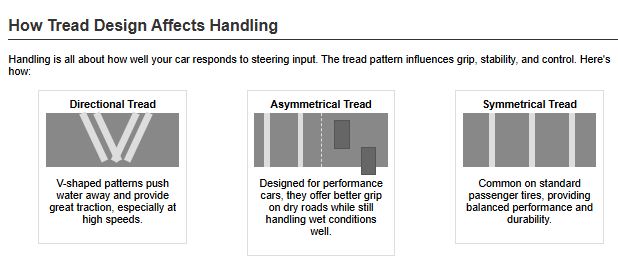
Handling is all about how well your car responds to steering input. The tread pattern influences grip, stability, and control. Here’s how:
- Directional Treads: These V-shaped patterns push water away and provide great traction, especially at high speeds.
- Asymmetrical Treads: Designed for performance cars, they offer better grip on dry roads while still handling wet conditions well.
- Symmetrical Treads: These are common on standard passenger tires, providing balanced performance and durability.
A good example? If you’ve ever driven a sports car with high-performance tires, you’ve likely felt the difference in how it grips the road when cornering.
Water Evacuation: Avoiding Hydroplaning
Water evacuation is critical in wet conditions. If your tires can’t channel water away fast enough, you risk hydroplaning—where your tires lose contact with the road. Here’s how tread design helps:
- Deep Grooves: Allow more water to escape, keeping the rubber in contact with the road.
- Sipes (Small Slits in the Tread Blocks): These improve traction by breaking up water film on the surface.
- Wide Circumferential Channels: Help funnel water out quickly, reducing the risk of skidding.
Think about the difference between running in sneakers versus smooth-soled shoes on a wet surface. Tread grooves work like the grips on your sneakers.
Dry and Wet Grip: Maximizing Traction
The level of grip your tires provide directly affects safety and performance. Here’s how different tread designs impact grip:
- Dry Grip: More rubber on the road means better traction. Performance tires have larger tread blocks for maximum contact.
- Wet Grip: More sipes and grooves improve water dispersion, helping maintain control in rainy conditions.
Ever notice how racing slicks (tires with no tread) are super grippy in dry conditions but useless in the rain? That’s because they maximize dry grip but have no channels to evacuate water.
Choosing the Right Tread for Your Needs
- Performance Driving? Go for asymmetrical or directional treads for better cornering and speed stability.
- Wet Climates? Choose tires with deeper grooves and more sipes for improved water evacuation.
- Everyday Use? A balanced symmetrical tread works best for durability and versatility.

How Tread Design Affects Handling
Handling is all about how well your car responds to steering input. The tread pattern influences grip, stability, and control. Here’s how:
- Directional Treads: These V-shaped patterns push water away and provide great traction, especially at high speeds.
- Asymmetrical Treads: Designed for performance cars, they offer better grip on dry roads while still handling wet conditions well.
- Symmetrical Treads: These are common on standard passenger tires, providing balanced performance and durability.
A good example? If you’ve ever driven a sports car with high-performance tires, you’ve likely felt the difference in how it grips the road when cornering.
Water Evacuation: Avoiding Hydroplaning
Water evacuation is critical in wet conditions. If your tires can’t channel water away fast enough, you risk hydroplaning—where your tires lose contact with the road. Here’s how tread design helps:
- Deep Grooves: Allow more water to escape, keeping the rubber in contact with the road.
- Sipes (Small Slits in the Tread Blocks): These improve traction by breaking up water film on the surface.
- Wide Circumferential Channels: Help funnel water out quickly, reducing the risk of skidding.
Think about the difference between running in sneakers versus smooth-soled shoes on a wet surface. Tread grooves work like the grips on your sneakers.
Dry and Wet Grip: Maximizing Traction
The level of grip your tires provide directly affects safety and performance. Here’s how different tread designs impact grip:
- Dry Grip: More rubber on the road means better traction. Performance tires have larger tread blocks for maximum contact.
- Wet Grip: More sipes and grooves improve water dispersion, helping maintain control in rainy conditions.
Ever notice how racing slicks (tires with no tread) are super grippy in dry conditions but useless in the rain? That’s because they maximize dry grip but have no channels to evacuate water.
Choosing the Right Tread for Your Needs
- Performance Driving? Go for asymmetrical or directional treads for better cornering and speed stability.
- Wet Climates? Choose tires with deeper grooves and more sipes for improved water evacuation.
- Everyday Use? A balanced symmetrical tread works best for durability and versatility.
FAQs
What happens if I use the wrong tread design for my conditions?
Your handling, safety, and fuel efficiency may suffer. For example, summer tires in winter conditions can be dangerous due to reduced grip.
How often should I check my tire tread?
At least once a month. If the tread depth is below 2/32 of an inch, it’s time for a replacement.
Does tread design affect fuel efficiency?
Yes! Low rolling resistance tires with efficient tread patterns improve fuel economy by reducing drag.
Final Thoughts
Your tire tread isn’t just about aesthetics—it’s a game-changer for performance, safety, and efficiency. Choosing the right tread pattern for your driving style and environment ensures better handling, superior water evacuation, and optimal dry/wet grip. So, next time you’re shopping for tires, remember: tread design matters!