

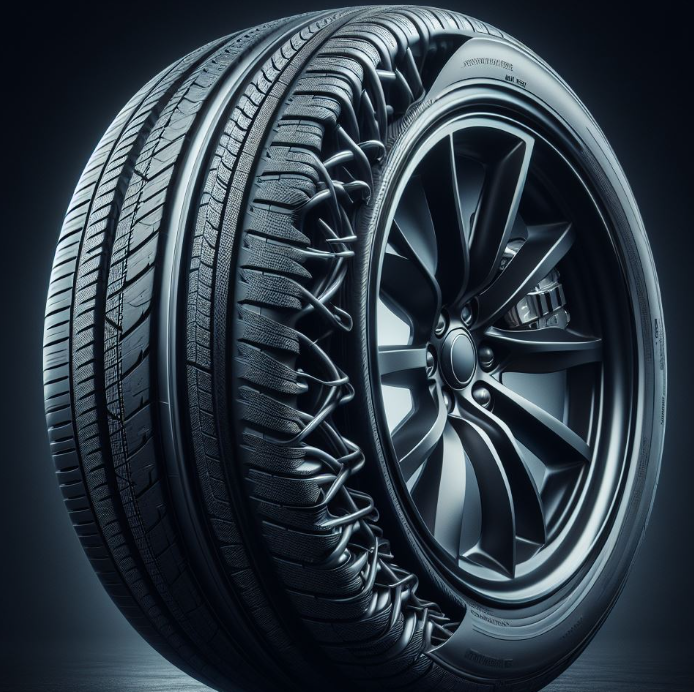
Run-flat tires are designed to allow a vehicle to continue moving even after a puncture or loss of air pressure, providing drivers with a potential solution to the age-old inconvenience of flat tires.
However, like any technological development, run-flat tires come with their own set of advantages and disadvantages that consumers should carefully consider before making a decision.
Advantages of Run-Flat Tires
1) Run-Flat Tires Offer Safety Benefits
The primary advantage of run-flat tires is enhanced safety. In the event of a sudden tire deflation, drivers can still maintain control of the vehicle and drive at reduced speeds for a limited distance. This can be particularly crucial in situations where finding a safe spot to change a tire might be difficult, such as on busy highways or in adverse weather conditions.
2) No Need for Spare Tires
Run-flat tires eliminate the need for a spare tire, saving valuable space in the trunk or cargo area. This reduction in weight can also contribute to improved fuel efficiency.
3) Convenience
Drivers no longer need to deal with the hassle of changing a flat tire on the side of the road, which can be a physically demanding and time-consuming task.
This convenience can be especially beneficial for drivers who are not comfortable or experienced with changing tires.
4) Extended Mobility
Run-flat tires allow drivers to continue driving for a limited distance (usually around 50 miles) at reduced speeds even after a tire has lost pressure. This gives drivers the flexibility to reach a service station or a safer location without the immediate urgency to stop.
5) Tire Monitoring Systems Will Alert To Pressure Decreases
Many vehicles equipped with run-flat tires also come with tire pressure monitoring systems that alert drivers to changes in tire pressure. This early warning can help drivers address potential issues before they become critical.
6) Reduced Downtime When Using Run-Flat Tires
One of the major advantages of run-flat tires is that they significantly reduce downtime in the event of a flat tire. Traditional tires require drivers to stop, change the tire, and potentially wait for assistance. Run-flat tires, on the other hand, allow drivers to continue their journey, minimizing disruptions to their schedule.
7) Improved Traction and Control
Run-flat tires often provide better traction and control in comparison to traditional tires that are completely deflated. The reinforced sidewalls of run-flat tires help maintain better contact with the road, enhancing stability and steering control even when the tire is compromised.
Disadvantages of Run-Flat Tires

Rougher Ride
Run-flat tires typically have stiffer sidewalls to support the weight of the vehicle when there is no air pressure in the tire. This can result in a rougher and less comfortable ride compared to regular tires, as the stiffer construction transmits more road imperfections to the cabin.
Limited Distance
While run-flat tires allow for continued driving after a puncture, the distance and speed at which they can be driven are limited. This can be a significant drawback if the nearest repair facility is beyond the tire’s limited range.
Higher Cost Of Run-Flat Tires
Run-flat tires tend to be more expensive to purchase than regular tires. Additionally, if a run-flat tire is damaged, repairing or replacing it can be more expensive due to the specialized construction and technology involved.
Lesser Availability
While the availability of run-flat tires has improved over the years, they might still be less common than traditional tires. This could be a concern if a replacement is needed in an area with limited tire options.
Repairability
Unlike regular tires, run-flat tires are often not repairable after sustaining damage. This means that if a run-flat tire is damaged beyond a certain point, it might need to be replaced entirely.
Compatibility With wheel Rims
Not all vehicles are designed to accommodate run-flat tires. Some vehicles may require specific modifications or adaptations to switch from traditional tires to run-flat tires. This could involve changes to suspension components, braking systems, or even the vehicle’s overall design.
Wheel Rim Damage
Run-flat tires can be more susceptible to damaging the rim if driven under low or no-pressure conditions for an extended period. This could result in the need to replace both the tire and the rim, which can be costly.
Limited Repair Facilities
While run-flat tires are becoming more popular, not all tire repair shops or service centers are equipped to handle them. This can be problematic if you experience tire issues while traveling in an area without the necessary facilities.
Compromised Winter Performance
In some cases, run-flat tires might not perform as well as traditional tires in extreme winter conditions. The stiffer construction that allows for continued driving can reduce the tire’s ability to flex and maintain traction on slippery surfaces.
Future Trends For Run-Flat Tires
As technology continues to advance, there are ongoing efforts to address some of the disadvantages associated with run-flat tires. Manufacturers are working on improving the comfort of run-flat tires by refining their construction to provide a smoother ride.

Additionally, advancements in tire pressure monitoring systems could lead to more accurate and informative alerts, allowing drivers to take preventive measures before a tire issue becomes critical.
FAQs About Run-Flat Tires
Can I replace run-flat tires with regular tires?
While it’s technically possible, it’s not recommended unless your vehicle is equipped to handle regular tires. Vehicles with run-flats often don’t come with a spare tire.
Do run-flat tires wear out faster than regular tires?
Some studies suggest that run-flat tires may need to be replaced sooner than regular tires, depending on the brand and driving style.
Are run-flat tires repairable?
Most run-flat tires cannot be repaired after being driven on flat, as the structure may be compromised.
How can I tell if my tire is a run-flat?
Run-flat tires are usually marked with specific symbols like RFT, SSR, or ZP, indicating their run-flat capabilities.
Are run-flat tires suitable for all vehicles?
Not all vehicles can accommodate run-flat tires. They require a tire pressure monitoring system (TPMS) and may need specific rims.
Run-flat tires offer a compelling solution to the inconvenience and potential danger of flat tires, providing drivers with extended mobility and enhanced safety. However, they also come with certain trade-offs, such as a rougher ride, limited distance capabilities, higher costs, and potential availability issues.