

The core safety features of run-flat tires revolve around their ability to keep you in control after a puncture. Imagine you’re driving on a busy highway, and suddenly you hear that dreaded “thump-thump” of a flat tire. With standard tires, you’d likely experience a rapid loss of control. Run-flats, however, offer a crucial advantage in this scenario.
Safety Features of Run-Flat Tires
Reinforced Sidewalls
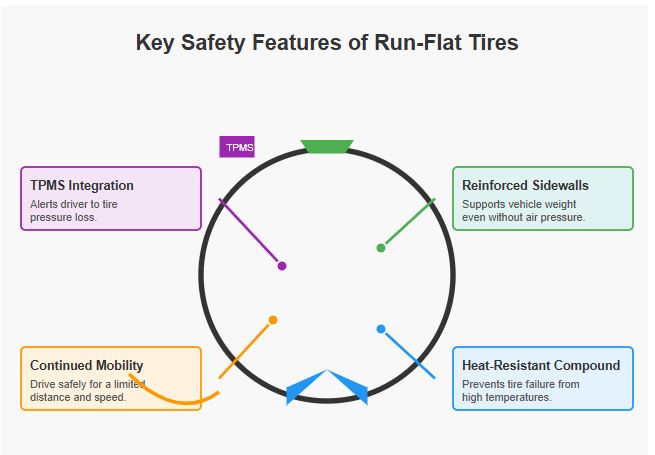
One of the key safety features of run-flat tires is their reinforced sidewalls. These sidewalls are much thicker and stronger than those of standard tires, which allows them to support the weight of the vehicle even when the tire is deflated. This reinforcement helps prevent the tire from collapsing and detaching from the rim, which could lead to a loss of control of the vehicle.
Self-Supporting Structure
Run-flat tires are built with a self-supporting structure that enables them to maintain their shape and continue to perform under the vehicle’s load without air pressure. This structure is crucial for allowing the driver to maintain control and maneuverability after a puncture.
Heat-Resistant Materials
The materials used in run-flat tires are often more heat-resistant than those in standard tires. When a tire loses air, the friction increases, which can cause heat buildup. Run-flat tires are designed to withstand this heat, reducing the risk of tire blowouts or further damage that could lead to an accident.
Tire Pressure Monitoring System (TPMS) Compatibility
Run-flat tires are typically used in conjunction with a TPMS, which alerts the driver when the tire pressure drops below a safe level. This early warning system is essential for safety, as it gives the driver time to react and plan for a stop to address the tire issue.
Benefits of Run-Flat Tires for Safety
- Prevention of Blowouts: By maintaining their shape after a puncture, run-flat tires reduce the risk of sudden blowouts, which can be particularly dangerous at high speeds.
- Control During Air Loss: The reinforced structure of run-flat tires allows for better control of the vehicle when air is lost, helping to prevent accidents.
- Extended Mobility: Run-flat tires provide the ability to drive for a certain distance after a puncture, typically up to 50 miles at a reduced speed, allowing the driver to reach a safe location for repair or replacement.
Frequently Asked Questions (FAQs) About Run-Flat Tire Safety
Can I repair a run-flat tire after a puncture?
It depends on the tire manufacturer’s recommendations and the extent of the damage. Some run-flat tires can be repaired if the puncture is within the tread area and meets specific size criteria. However, many manufacturers advise replacement for safety reasons.
Do run-flat tires eliminate the need for a spare tire?
Many vehicles equipped with run-flat tires do not come with a spare tire, saving space and weight. However, it’s a good idea to check your vehicle’s specifications and consider your personal driving needs.
Are run-flat tires safer than regular tires?
In the event of a puncture, run-flat tires offer superior safety by maintaining vehicle control and allowing you to continue driving to a safe location. However, under normal operating conditions, the safety difference is negligible.
How will I know if my run-flat tire has a puncture?
Your vehicle’s Tire Pressure Monitoring System (TPMS) will alert you to a loss of pressure. You might also notice a change in handling or an unusual noise.
What speed can I drive on a punctured run flat?
You should stick to the speed limit set by the manufacturer. This is normally 50mph.